Tree work touches more than branches and trunks. It affects stormwater, soil structure, wildlife corridors, air quality, even how well your house stays cool in August. The way a crew manages a single maple in your front yard can either support that living system or slowly undermine it.
In Streetsboro, where mature trees share space with newer developments, the difference between a conventional tree service and a truly eco-friendly approach shows up over years, not days. Homeowners notice it when lawns stop pooling after heavy rain, when storm damage is less severe, and when birds return to yards that used to feel lifeless.
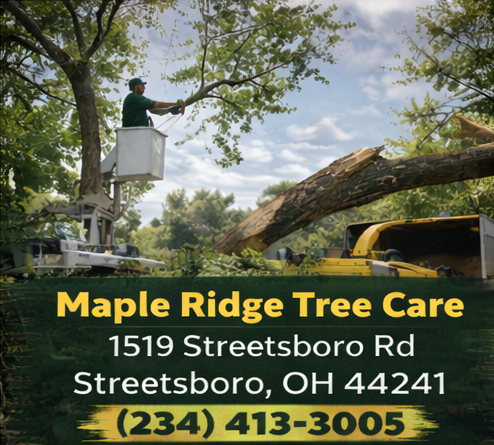
Maple Ridge Tree Care has built its reputation on that long view. Whether you search for “tree service Streetsboro” or hear about them from a neighbor, what sets them apart is not just safe tree removal or careful tree trimming, but how they think about the whole urban forest around each job.
This guide walks through what eco-friendly tree care actually looks like on the ground in Streetsboro, how Maple Ridge Tree Care applies those ideas, and how to choose practices that fit your property and your values.
What “eco-friendly” really means for tree work
The phrase gets thrown around so much that it risks losing meaning. In the context of a tree service, it has a few specific layers.
First, an eco-conscious crew tries to preserve healthy trees whenever possible. That does not mean refusing necessary removals. It means evaluating structure, disease, and site conditions carefully before pushing for the chainsaw.
Second, when work is necessary, they minimize collateral damage. That includes soil compaction from heavy trucks, damage to understory plants, stress to nearby trees, and disruption to wildlife.
Third, they handle the aftermath responsibly. Wood, brush, leaves, and stump grindings all have value. An eco-minded company treats them as resources instead of waste that should be hauled directly to a landfill.
Overlay all that with Streetsboro’s specific climate and soils and the details start to matter. Northeast Ohio clay holds water. Heavy equipment rutting a yard can create near-permanent drainage problems. Freeze-thaw cycles stress roots. Summer storms crack poorly pruned trees. An experienced arborist blends ecological principles with those local realities.
Streetsboro’s landscape and why it matters
Tree work in Streetsboro is not the same as tree work in a sandy coastal town or a western city fighting drought. A few local features shape what good tree care looks like here.
Winters are cold and often wet. Ice loads snap weak unions and overextended limbs. After a couple of ice storms, you can walk a street and instantly see which oaks and maples were thinned thoughtfully, and which were topped years ago and now break in all the wrong places.
Summers bring thunderstorms with strong wind bursts. Trees with shallow roots in compacted soils are more likely to lean, heave, or uproot altogether. That is one reason Maple Ridge Tree Care spends a lot of time talking about soil health before they ever talk about pruning cuts.
Many residential lots have fill dirt over heavy clay. Water may sit near the surface for long periods, starving roots of oxygen. When a conventional crew drives a loaded chip truck across that type of yard, the ruts can change rooting patterns for decades.
There is also the patchwork of older shade trees and younger plantings. Some Streetsboro neighborhoods still have mature sugar maples and oaks that anchor entire blocks. Others have small ornamental pears planted too close to sidewalks and driveways. An eco-friendly tree service works with both: preserving big canopy trees and helping homeowners gradually shift from short-lived, problematic species to longer lived, site appropriate ones.
Tree service with a conservation mindset
When people look up “tree service Maple Ridge Tree Care” or call about a problem tree, the first interaction often sets the tone. A rushed estimate that jumps straight to “tree removal” is a red flag. A thoughtful walk through the site, some probing questions, and a willingness to suggest less drastic work where safe tells you the company sees more than a transaction.
On a typical Streetsboro property, an eco-aware arborist looks at more than the tree that prompted the call. They notice how close gutters discharge to trunks. They check how mower blades have nicked root flares. They scan the canopy for old storm damage, poorly healed cuts, and signs of decay.
Instead of giving a one size fits all quote, they may lay out several paths. For example: reduce the crown of a large red maple over three visits rather than one aggressive cut, pair light structural pruning of an ash with soil aeration and mulching, or create a staged plan to remove declining trees while replanting natives so the yard never loses shade entirely.
That slower, more strategic approach saves trees that conventional practices would write off. It also tends to save money over time because you are not constantly reacting to emergencies.
Eco-friendly tree removal in Streetsboro
There https://ohio.bizhwy.com/maple-ridge-tree-care-id22458.php are times when tree removal Streetsboro residents request is not optional. Large trees that have significant decay at the base, multiple failed stems, or a history of dropping heavy limbs over high traffic areas are not worth the risk.
The ecological question is not whether to remove a truly dangerous tree, but how to do it.
Maple Ridge Tree Care typically begins with a clear risk assessment. That includes identifying the target zone beneath the tree: houses, driveways, kids’ play areas, utility lines. It also usually involves some investigation into the interior of the trunk. Sounding with a mallet, using a probe, or, for larger jobs, bringing in more advanced tools. Once risk is established, the plan shifts to minimizing impact.
Where possible, they use rigging that avoids dropping large wood directly onto turf. Pieces are lowered in sections, so even if a crane is not needed, the yard stays intact. When heavy equipment must cross the lawn, ground protection mats spread the weight and protect both grass and soil structure.
An overlooked aspect of eco-friendly tree removal is what happens after the last cut. In many cases, leaving a portion of the trunk as a standing habitat snag, at a safe height away from targets, can support cavity nesting birds and beneficial insects. On tighter lots this is not always possible, but it should be discussed instead of automatically grinding every stump flush and hauling everything away.
Where full removal is necessary, Maple Ridge Tree Care favors on-site reuse. Logs might be cut into firewood for the homeowner or stacked neatly as a woodpile habitat. Chips can be left for mulch in planting beds or woodland edges. That keeps organic material cycling in the same watershed rather than trucking it miles away.
Tree trimming that supports long term health
Tree trimming in Streetsboro runs the gamut from light clearance pruning away from roofs and wires to full structural work on young trees. The difference between eco-friendly trimming and quick cut jobs looks small in the moment, but it adds up.
Thoughtful pruning respects the tree’s natural form. A good arborist avoids flush cuts that remove the branch collar and slow healing. They also avoid topping, which forces a flush of weak sprouts and sets the tree up for future breakage.
On broad crowned species like silver maple, a careful reduction might focus on specific limbs with poor attachment angles or early signs of decay. On younger trees, subordinating competing leaders early can prevent the classic “V” crotch failure that shows up 20 years later in a storm.
From an environmental standpoint, selective thinning opens the canopy just enough for wind to pass through without radically changing the shade pattern on your property. That matters when you rely on trees to cool your home and protect tender understory plants.
A crew that views trimming as part of whole yard ecology will coordinate pruning with other work. For instance, they may reduce load on a leaner and then add mulch in a wide ring to encourage root growth, or prune to improve light for a struggling native shrub layer you have planted nearby.
Electric tools, fuels, and noise
Residents often focus on visible care practices, but the choice of equipment and fuels has its own environmental footprint. Chainsaws, trucks, chippers, and stump grinders all leave a mark.
Maple Ridge Tree Care has gradually shifted a portion of its ground tools to electric where it makes sense. Battery powered chainsaws, pole saws, and blowers are now viable for small to medium sized work. They reduce on-site emissions, lower noise levels, and do not leave a lingering tree service exhaust smell in your yard.
Gas powered equipment is still necessary for larger removals and heavy chipping, especially on mature Streetsboro trees with trunks over 20 inches in diameter. The eco-friendly angle there has more to do with maintenance and fuel choices: properly tuned engines, low smoke oils, and bio based bar and chain oils that break down more easily in the environment.
Noise is an underrated form of pollution. Crews that pay attention to it will sequence tasks so that the loudest operations happen in shorter bursts, not spread out over the entire day. Small choices like using hand rakes where practical instead of blowers for every leaf can make a noticeable difference for both people and wildlife.
Soil health and root protection
Almost every long term tree problem I see around Streetsboro has roots, literally, in soil issues. Roots receive less attention because they are invisible, but eco-friendly tree care gives them priority.
Compaction from foot traffic, mowers, and parked vehicles slowly squeezes the pore spaces out of soil. Water has trouble infiltrating, then sits on top. Roots grow shallow and weak. Trees become more vulnerable to drought, even when you feel like you are watering frequently.
Maple Ridge Tree Care often recommends simple, low impact root zone improvements along with pruning or tree removal. Loosening soil with air tools instead of excavation, topdressing with compost, and then mulching in a wide, gentle ring creates a better environment for feeder roots. The visual change is subtle, but the biological change is dramatic.
Streetsboro’s heavy clay needs special attention. Adding small amounts of organic matter over time, rather than tilling in large amounts at once, allows soil structure to evolve without creating perched water tables or weak layers. An arborist who understands this will caution against quick fix solutions like deep, narrow gravel backfill around trunks, which can make drainage worse.
Protecting roots during tree removal is another piece of the puzzle. When a large tree comes out, the temptation is to immediately plant another in the same hole. Eco-friendly practice suggests waiting or shifting the location slightly, because decaying roots alter soil oxygen and make establishment harder for new trees. A seasoned tree service will talk through this timeline instead of just planting something to finish the job.
Handling and reusing wood and debris
If you drive past a typical tree removal in progress, you might see a mountain of branches and logs beside the chip truck. How that pile gets handled is one of the clearest markers of a company’s environmental approach.
Landfilling wood is almost always the worst option. It ties up organic matter that could feed soil life, and as it decomposes without enough oxygen, it produces methane. Burning brush on site, where allowed, has its own air quality issues and wastes potential mulch or habitat.
Maple Ridge Tree Care tends to treat woody material as a set of useful streams. The main trunk might head to a local sawyer for milling if the species and size make sense. Straight logs unsuitable for boards but still solid often become firewood. Smaller limbs and brush go into the chipper, then either stay on site as mulch or feed into commercial composting.
For homeowners, this is an opportunity. If you have perennial beds, vegetable gardens, or erosion prone slopes, a load of free chips from your own tree work is a gift. Spread in a 2 to 4 inch layer, they suppress weeds, retain moisture, and slowly feed soil organisms. Maple Ridge crews regularly help homeowners decide where to place chips or how much to keep versus haul away.
Even stump grindings can be valuable if used correctly. Mixed with some soil and allowed to decompose for a season, they make a decent backfill for low spots. The key is not to plant new trees directly into fresh grindings, because the high carbon content can tie up nitrogen as it breaks down.
Wildlife, cavities, and “messy” edges
Eco-friendly tree service sometimes challenges our preference for neatness. That tidy instinct is understandable, but many birds, pollinators, and small mammals rely on features we often remove without thinking.
Cavity nests in older trees, for example, support woodpeckers, chickadees, owls, and small mammals. Maples and oaks with minor hollows that do not compromise structural integrity can be pruned and monitored instead of removed outright. Maple Ridge Tree Care is usually careful to explain this trade off: you gain wildlife value if you accept some irregularity in the trunk or canopy.
Even on a more manicured property, leaving a small brush pile at the back of a lot or under a stand of pines provides cover for songbirds and beneficial predators like garter snakes. That sort of habitat rarely bothers neighbors if it is placed thoughtfully.
When pruning, a crew can selectively retain some smaller deadwood high in the canopy where it poses no real risk. That deadwood hosts insects that become food for birds. Not every stub needs to come out simply because it offends a sense of order.
At ground level, a layered planting under and around trees helps. Instead of bare turf all the way up to the trunk, consider native shrubs, groundcovers, and wildflowers in a mulched bed. Maple Ridge often sees better long term tree health where homeowners have allowed those kinds of understory plantings to develop.
Choosing species and planning for the next generation
Eco-friendly tree service in Streetsboro is not just about caring for existing trees. It is also about setting up the next wave of canopy so that future residents inherit a resilient urban forest.
When Maple Ridge Tree Care advises on new plantings, they avoid overused, short lived species that tend to fail spectacularly in storms. Ornamental pears, for instance, grow quickly but develop weak, crowded branches that snap under snow and ice loads. Many older neighborhoods are learning that lesson the hard way.
Instead, they suggest a mix of native and well adapted species: oaks, hickories, sugar and red maples suited to the site, disease resistant elms, and a variety of understory trees like serviceberry and hornbeam. Diversity matters. Streets with only one species are vulnerable to insect or disease outbreaks that move tree to tree with little resistance.
Placement is just as important as species. Trees planted too close to houses, sidewalks, or power lines become future removal jobs. Thoughtful spacing, with a clear vision of the mature crown spread, reduces the need for heavy corrective pruning or expensive removals later.
An eco-focused tree service helps homeowners map this out, sometimes literally sketching a plan that shows likely shade patterns in 10, 20, and 30 years. That planning connects today’s tree trimming and tree removal decisions with a longer arc of neighborhood canopy health.
Practical ways to keep your tree work eco-friendly
Homeowners often ask what they can do on their end to make sure their tree care lines up with their environmental values. A few habits go a long way.
List 1: Simple practices you can request from your tree service
- Ask that heavy equipment stay on paved areas or use ground protection mats where crossing lawn is unavoidable. Request that wood chips or some logs be left on site for mulch, paths, or habitat, instead of hauling everything away. Discuss the possibility of retaining safe wildlife snags or small cavity sections when full removal is not strictly necessary. Coordinate pruning with root zone improvements, like mulching or soil aeration, especially for stressed trees. Confirm how the company disposes of debris, and favor services that use composting, milling, or firewood channels over landfilling.
These are not extravagant measures. They simply align everyday jobs with better outcomes for soil, water, and wildlife.
What to look for when hiring a tree service in Streetsboro
Not every crew that offers tree removal Streetsboro wide shares the same priorities. Some are perfectly competent at basic cutting but do not think much beyond the immediate task. Others, like Maple Ridge Tree Care, build ecological awareness into their daily routines.
You can usually tell which type you are dealing with by the questions they ask and the options they offer.
List 2: Questions that help you gauge eco-friendly practices
- How do you decide between recommending tree trimming and tree removal in borderline cases? What steps do you take to protect soil and nearby plants during your work? Do you offer on-site reuse of wood and chips, and how do you typically handle debris? Are you able to use electric tools for any parts of the job to reduce noise and emissions? How do you factor wildlife habitat and long term site ecology into your recommendations?
A company that gives clear, experience based answers to these questions is more likely to approach your yard as an ecosystem rather than just a job site.
The role of Maple Ridge Tree Care in Streetsboro’s urban forest
Tree service in Streetsboro used to be almost entirely reactive. Storm hits, branches fall, someone calls around until they find a crew that can come quickly and cut things up. That still happens, and fast response will always matter, but there is a quiet shift under way.
Homeowners are starting to see their individual trees as part of a shared urban forest. Shade from your maple blends into the next yard. Roots of oak clusters intercept stormwater that would otherwise flood streets. Bird territories cross property lines without regard for fences.
Maple Ridge Tree Care sits in the middle of that shift. By pairing standard offerings like tree trimming, tree removal, and routine tree service with ecological practices, they help Streetsboro residents care not just for isolated trees but for a living network.
Healthy, well placed, well pruned trees reduce energy use, shelter homes from wind, slow rain before it hits storm drains, and create places where people actually want to spend time outside. Doing that work in a way that protects soil, wildlife, and future canopy is not a luxury. It is simply good stewardship of a town that depends on its green cover far more than many people realize.